- 78 East Street, Ashburton, Devon TQ13 7AX


Our Clinical Lead, Dr. Mitesh Badiani, has over 15 years experience in placing dental implants and has completed over 2000 implants in that time. Mitesh has been a clinical assistant professor for University of Warwick for over 10 years on the MSc Implant programme and is a mentor for both ” Ankylos and Bio Horizon ” implant systems but has experience with over 8 other implant systems too.
Many dental practices in the South West refer patients to us with missing teeth for dental implants and together we can replace a single missing tooth to full mouth reconstructions.
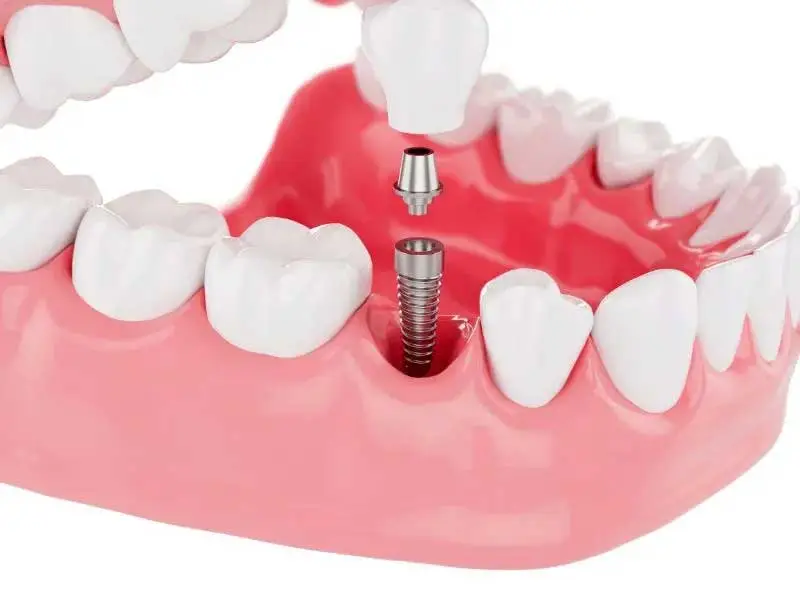
Dental implants are specially designed screws which are implanted into the jaw and act like natural tooth roots. They are a permanent replacement for missing or damaged teeth and with routine care, dental implants have a high level of success.
We can replace one or more teeth at the same time that they are removed by inserting an implant, made from titanium, into the empty extraction socket. The advantages of this technique for you are that:
Immediate placement is only possible if you are suitable, this decision will be made by the clinician at your initial consultation.
Before your new tooth can be attached to the implant it is necessary to leave it undisturbed for several months while the bone attaches to its surface. During this period a small temporary denture or bridge may be worn to fill the gap.
Replacing missing teeth has several advantages:


If one tooth is to be extracted then it can be replaced by a single implant. If a number of teeth are to be lost, more implants will be required. It is not always necessary to match the exact number of teeth being extracted, for example, it may be possible to fit three teeth on two implants. Eight implants are often all that are required to replace a full arch of teeth.
Once implant bone attachment has been checked and confirmed, the new teeth can be made. They are made from tooth coloured porcelain producing a natural appearance, which is almost impossible to spot against natural teeth. A titanium post is connected to the implant and held in place with a small screw. The finished tooth is then glued onto the post with special type of dental cement.


To avoid damaging the bone and gum the tooth is removed very gently, which minimises the amount of pain after the procedure. Surprisingly, the discomfort experienced is typically no different to that felt following a normal tooth extraction.
There is no need for stronger injections during the procedure as the same local anaesthetic used to numb the tooth for extraction is often sufficient.
We allow six months for the bone to fuse around the implant and become solid in the jawbone. After six months the Dental Surgeon begins to build the new crowns, bridges or dentures on the implants.